
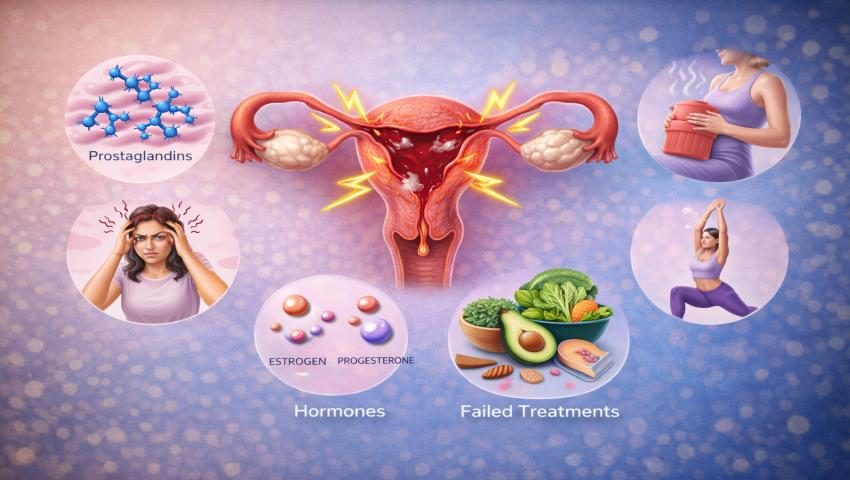
Menstrual pain, medically called dysmenorrhea, is the cramping pain many women feel in the lower abdomen before or during their periods, commonly known as period cramps. The pain can range from mild discomfort to severe cramps that disturb daily routine.
Period pain is very common. In fact, most women experience cramps at some point in their lives. For some, it is manageable. For others, it can affect work, school, sleep, and mood.
Many women prefer to try natural home remedies first because they are simple, safe, and easily available at home. These remedies can be very helpful for mild to moderate menstrual cramp.
However, if the pain is severe or keeps getting worse every month, proper menstrual treatment from a gynecologist is important. In this blog, we’ll share six simple and effective ways to relieve period pain naturally. But first, let’s understand why these cramps happen.
Why Do Period Cramps Happen? (Simple Medical Explanation)
Period cramps happen due to natural changes in the uterus during menstruation, but the level of pain can differ for every woman. Here are some common reasons why cramps may feel worse in certain months:
- Role of Prostaglandins: During periods, your body releases chemicals called prostaglandins. These chemicals make the uterus contract to push out its lining. Higher levels of prostaglandins can cause stronger cramps and more pain.
- Uterine Contractions: The uterus is a muscle. When it contracts strongly, it may press on nearby blood vessels. This temporarily reduces oxygen supply to the muscle, causing pain and cramping.
- Hormonal Changes: When there is a shift in hormone levels—especially if estrogen becomes dominant compared to progesterone—the body may release more prostaglandins. Because progesterone helps keep the uterine muscles relaxed, lower levels can lead to stronger contractions and more painful cramps.
- Heavy Menstrual Flow: If your bleeding is heavier than usual, the uterus has to work harder to clear out its lining. These repeated and stronger contractions can result in more intense and longer-lasting discomfort.
- Stress, Tiredness & Daily Habits: Your lifestyle also plays an important role in how your periods feel. High stress levels, poor eating habits, lack of proper sleep, and very little physical activity can disturb hormone balance and increase inflammation in the body. When these factors continue for months, they can make period cramps feel more uncomfortable and harder to manage.
- Underlying Health Problems: In some cases, very painful periods are not just “normal cramps” but a sign of an underlying condition. Problems like Endometriosis,Adenomyosis, Uterine fibroids, Pelvic inflammatory disease, or Ovarian cyst can cause severe and longer-lasting pain.
If your cramps are getting worse every month or are interfering with your daily routine, it’s important to consult Dr. Shraddha Galgali doctor for proper evaluation and treatment.
Top Home Remedies That Really Work for Period Pain:
1. Heat Therapy (Most Effective & Doctor-Recommended):
Heat helps relax uterine muscles and improves blood flow.
You can try:
- Heating pad on the lower abdomen
- Warm water bag
- Warm shower or bath
Use heat for 15–20 minutes at a time for best results.
2. Herbal Teas for Natural Relief:
Certain herbal teas reduce inflammation and muscle spasms:
- Ginger tea – Helps reduce pain and nausea
- Chamomile tea – Relaxing and soothing
- Cinnamon tea – May reduce heavy bleeding
- Fennel tea – Helps with bloating and cramps
Drink 1–2 cups daily during your period.
3. Gentle Exercise & Yoga:
You may not feel like exercising, but light movement can reduce cramps.
Try:
- Light walking
- Gentle stretching
- Yoga poses like Child’s Pose or Cat-Cow
- Deep breathing exercises
Exercise releases endorphins, which are natural pain relievers.
4. Abdominal Massage:
A gentle massage can relax tight muscles.
- Use warm coconut or sesame oil
- Massage in circular motions
- You can add diluted lavender oil for relaxation
Avoid strong pressure.
5. Hydration & Diet Changes:
Small diet changes can make a big difference:
- Drink more water to reduce bloating
- Reduce caffeine and junk food
- Eat magnesium-rich foods like nuts and seeds
- Dark chocolate (70% cocoa, small portion) may help relax muscles
6. Acupressure Points:
Certain pressure points may help reduce cramps.
- The inner ankle area (three finger-widths above the ankle bone)
- Press gently for 1–2 minutes
If unsure, consult a trained professional before trying regularly.
periods pain relief food:That Help Reduce Period Pain
Include these fruits in your diet as periods pain relief food to help reduce discomfort and support better menstrual health.
- Anti-inflammatory foods like turmeric and leafy greens
- Iron-rich foods like spinach and dates (especially if bleeding is heavy)
- Omega-3 sources like flaxseeds and walnuts
- Fruits like bananas and papaya can help reduce bloating
Things to Avoid During Painful Periods:
These are things to avoid during painful periods:
- Excess salt (increases bloating)
- Too much coffee
- Skipping meals
- High stress
Stress can increase muscle tension and worsen cramps.
When Should You See Dr.Shraddha Galgali?
While most menstrual cramps improve with simple home care, certain symptoms should not be overlooked. You should consult Dr. Shraddha Galgali doctor, if:
- Pain that is so strong that you cannot go to work, school, or do your normal daily activities
- Bleeding that is very heavy, where you need to change your pad every 1–2 hours
- Cramps that continue for more than 2–3 days without relief
- Period pain that suddenly becomes much worse than your usual cramps.
Conclusion:
Home remedies can be very effective for mild to moderate menstrual pain. Simple steps like heat therapy, herbal tea, light exercise, and healthy eating can provide real relief.
However, always listen to your body. If pain is severe or affecting your daily life, do not ignore it. Proper evaluation and expert menstrual treatment are important.
At Dr. Shraddha Excella Women’s Clinic, you will receive personalized care, proper diagnosis, and treatment tailored to your needs. Take the first step toward a pain-free and healthier life. Book your appointment today.
FAQ:
You can reduce period pain quickly by placing a heating pad or warm water bag on your lower abdomen and resting for some time. Drinking warm herbal tea like ginger or chamomile and doing gentle stretching can also help relax the muscles and ease cramps.
Painkillers may not work if the cramps are very severe or caused by an underlying problem like hormonal imbalance or conditions such as endometriosis or fibroids. If your pain does not improve even after taking medicine, it is better to consult Dr. Shraddha Galgali for a proper check-up and treatment.
Yes, mild nausea during periods is common. It happens because the same hormones that cause uterine cramps can also affect your stomach. If nausea is severe, frequent, or comes with very severe pain or vomiting, it’s better to consult Dr. Shraddha Galgali.