
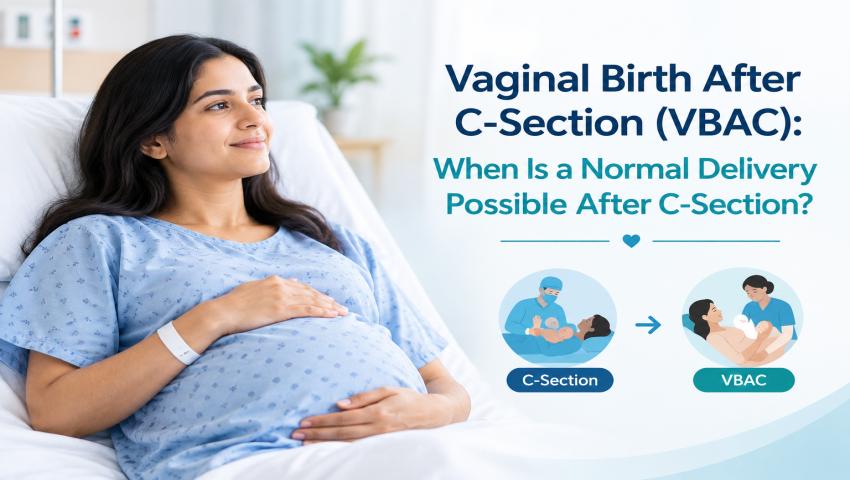
Vaginal Birth After C-Section (VBAC): When Is a Normal Delivery Possible After C-Section?

Having a Caesarean section for a previous pregnancy does not automatically mean that every future baby must be delivered by C-section.

Some women who have had a previous Caesarean may be able to have a vaginal birth after Caesarean, commonly known as VBAC.

However, VBAC is not suitable for everyone. The decision depends on several factors related to your previous surgery, current pregnancy, medical history and the facilities available at the hospital.

If you are pregnant after a previous C-section and wondering whether a vaginal birth may be possible, understanding VBAC can help you have a more informed discussion with your obstetrician.

What Is VBAC?

VBAC stands for Vaginal Birth After Cesarean.

When a woman who has previously had a C-section plans to attempt vaginal delivery, the process is often called a trial of labor after cesarean (TOLAC). If the trial is successful, the baby is delivered vaginally. If vaginal delivery is not possible or becomes unsafe, a repeat C-section may be required.

Can You Have a Normal Delivery After a C-Section?

In some cases, yes.

However, there is no universal rule that every woman with one previous C-section can or cannot have a vaginal delivery.

Your doctor will consider several factors before recommending whether attempting VBAC is appropriate.

These may include:

  • The reason for your previous C-section
  • The type of incision made on your uterus
  • Number of previous C-sections
  • Your current pregnancy
  • Position and size of the baby
  • Placental location
  • Other medical or pregnancy-related conditions
  • Previous vaginal delivery, if any
  • Availability of appropriate emergency obstetric care

Why Does the Previous Uterine Scar Matter?

The scar on the uterus is particularly important.

A low-transverse uterine incision is the most common type and generally carries the lowest risk of uterine rupture during a future trial of labor.

Other incision types, particularly certain high vertical or classical incisions, can carry a higher risk and may make VBAC inappropriate.

Importantly, the scar on your skin does not tell you what type of incision was made on your uterus. Your previous surgical records can provide this information.

What Are the Benefits of a Successful VBAC?

When successful, VBAC can offer several benefits.

These may include:

  • Avoiding another abdominal surgery
  • Shorter recovery compared with C-section
  • Lower risk of certain surgical complications
  • Less blood loss in some circumstances
  • Potentially fewer complications associated with multiple Caesarean deliveries in future pregnancies

A successful VBAC can also allow a woman to experience vaginal birth if that is important to her.

What Are the Risks of VBAC?

VBAC also has risks that need to be carefully discussed.

One of the most serious, although uncommon, complications is uterine rupture, where the previous uterine scar opens during labour. This can be dangerous for both mother and baby and requires immediate medical attention.

There is also a possibility that labour may not result in a vaginal delivery and an emergency C-section may become necessary.

This is why attempting VBAC should be planned in a setting where appropriate emergency care is available.

What Factors Can Affect the Chances of VBAC?

Every pregnancy is different. Factors that may influence the possibility of successful vaginal birth include:

  • Previous Vaginal Delivery: A previous vaginal delivery can be an important factor when assessing VBAC prospects.
  • Reason for Previous C-Section: The reason for the earlier C-section may also influence the current delivery plan.
  • Type of Uterine Incision: The previous surgical records can help your obstetrician determine whether the uterine scar is appropriate for considering VBAC.
  • Current Pregnancy: The baby’s position, estimated size, placental location and other pregnancy factors may influence the decision.
  • Hospital Facilities: VBAC should be attempted in a hospital that can respond quickly if an emergency arises.

Does Choosing VBAC Mean You Will Definitely Have a Normal Delivery?

No.

Planning a VBAC means planning an attempt at vaginal birth, not guaranteeing the outcome.

Labour can progress differently than expected. If the health of the mother or baby becomes a concern, or if labour does not progress appropriately, a Caesarean delivery may become the safest option.

The priority should always be the safety of both mother and baby.

Is VBAC Safe for Everyone?

No. VBAC suitability must be assessed individually.

Some women may have medical or surgical factors that make attempting labour unsafe. Others may be reasonable candidates after detailed evaluation.

This is why it is important not to compare your pregnancy with a friend’s or relative’s experience. Your previous operation records and current pregnancy details matter.

Questions to Ask Your Obstetrician:

If you have had a previous C-section, consider discussing these questions during your pregnancy consultation:

  • What type of uterine incision did I have?
  • Am I a suitable candidate for VBAC?
  • What factors could affect my chances of vaginal birth?
  • What are the risks in my particular case?
  • Where should I plan my delivery?
  • What happens if labour does not progress normally?
  • Could an emergency C-section become necessary?

Shared decision-making between the woman and her obstetrician is an important part of choosing between TOLAC/VBAC and a planned repeat Caesarean.

Planning Your Delivery After a Previous C-Section:

If you are pregnant after a previous C-section, you do not necessarily need to make the delivery decision based on fear or assumptions.

Instead, start the discussion early, provide your previous medical and surgical records, attend regular prenatal appointments and understand the benefits and risks of your available options.

For personalised assessment and pregnancy guidance, Dr. Shraddha Galgali, Consultant Obstetrician & Gynecologist, can evaluate your medical history and current pregnancy and help you understand whether VBAC may be an option for you.

Conclusion:

A previous C-section does not automatically rule out the possibility of a vaginal birth. For some women, VBAC may be a safe and appropriate option. For others, a repeat Caesarean may be the safer choice.

The right decision depends on your individual medical history, previous uterine incision, current pregnancy and the availability of appropriate medical care.

Rather than focusing only on whether a “normal delivery” is possible, the most important goal is to choose a safe and medically appropriate birth plan for both mother and baby.
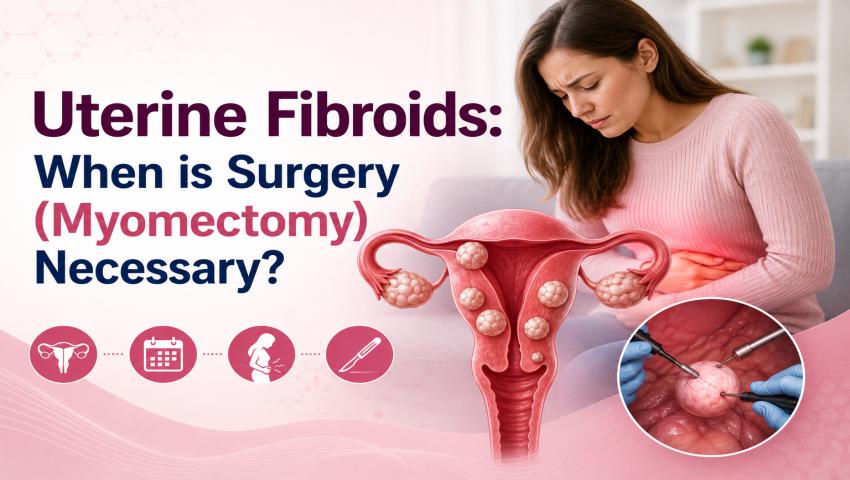
Uterine Fibroids: When is Surgery (Myomectomy) Necessary?

Discovering that you have uterine fibroids can bring up a lot of questions. Are they dangerous? Will they affect my fertility? Do I need to get them removed? First, take a deep breath. Uterine fibroids are non-cancerous (benign) growths that develop in or around the wall of the uterus. They are incredibly common, affecting up to 70-80% of women by the time they reach age 50. In fact, many women have them and never even know it because they experience zero symptoms.

However, for some women, fibroids can cause severe pain, heavy bleeding, and fertility challenges. When lifestyle changes and medications fail to bring relief, surgery becomes a viable option.

If you are considering surgical options, a myomectomy is often the top choice—especially if you wish to preserve your fertility. Let’s dive into what a myomectomy is and exactly when it becomes necessary.

What is a Myomectomy?

Unlike a hysterectomy (which removes the entire uterus), a myomectomy is a surgical procedure that removes only the fibroids, leaving your uterus intact. Because it preserves your reproductive organs, it is the preferred surgical option for women who plan to have children in the future or who simply wish to keep their uterus.

Depending on the size, number, and location of your fibroids, a myomectomy can be performed in three ways:

  • Abdominal Myomectomy (Open Surgery): For very large or numerous fibroids.
  • Laparoscopic or Robotic Myomectomy (Keyhole Surgery): A minimally invasive approach using small incisions, offering faster recovery and less pain.
  • Hysteroscopic Myomectomy: Done through the vagina and cervix (no incisions) for fibroids growing inside the uterine cavity.

When is a Myomectomy Necessary?

Your gynecologist will always look at your symptoms, your age, and your family planning goals before recommending surgery. Generally, a myomectomy is highly recommended in the following scenarios:

1. You Experience Heavy, Unprolonged Menstrual Bleeding:

If your periods are so heavy that you are changing pads every hour, passing large blood clots, or bleeding for more than a week, it’s a major red flag. Severe blood loss often leads to chronic fatigue and anemia (low red blood cell count). If hormonal medications or non-surgical treatments fail to control the bleeding, removing the fibroids is the best way to restore your quality of life.

2. Fibroids Are Interfering with Fertility or Causing Miscarriages:

While many women with fibroids have perfectly healthy pregnancies, certain fibroids can get in the way.

  • Submucosal fibroids (which grow into the uterine cavity) can alter the lining of the womb, making it difficult for a fertilized egg to implant.
  • Large fibroids can block the fallopian tubes, preventing sperm from meeting the egg. If you have been struggling with unexplained infertility or have experienced recurrent miscarriages, a myomectomy can significantly improve your chances of conceiving and carrying a baby to term.
3. You Suffer from Severe Pelvic Pain or Pressure:

As fibroids grow, they take up valuable space in your pelvis. This can lead to a constant, dull ache in your lower abdomen, chronic lower back pain, or pain during intercourse. If the pain is affecting your daily routine and over-the-counter painkillers no longer help, surgical removal is necessary.

4. The "Bulk Effect" (Pressure on Bladder and Bowel):

Large fibroids can weigh down on surrounding organs.

  • If a fibroid presses against your bladder, you might feel the urge to urinate constantly or struggle to empty your bladder completely.
  • If it presses against your bowel, it can cause chronic constipation, bloating, and abdominal distension (making your abdomen look prematurely pregnant).
5. Rapidly Growing Fibroids:

While fibroids are benign, any growth that increases in size very quickly needs careful evaluation. If your doctor notices during routine ultrasounds that a fibroid is growing aggressively, they may recommend a myomectomy to remove it and biopsy the tissue, ensuring there are no complications.

Is a Myomectomy Right for You?

The decision to undergo surgery is highly personal. If you are near menopause, your doctor might suggest waiting, as fibroids naturally shrink when estrogen levels drop after menopause. However, if you are in your reproductive years and fibroids are dictating your comfort, energy levels, or plans for a family, a myomectomy can be life-changing.

Next Steps: Consult an Expert

Every woman’s body and medical history are unique. If you suspect you have fibroids or have already been diagnosed and want to explore your surgical options—particularly minimally invasive laparoscopic myomectomy—it is crucial to consult an experienced gynecologist and advanced laparoscopic surgeon.

Don’t let chronic pain or heavy bleeding hold you back. Schedule a consultation today to discuss a personalized treatment plan tailored to your health and future goals.

How Are Ovarian Cysts treatment Treated? A Complete Guide

Ovarian cysts treatment plays a key role in women’s reproductive health. While most cysts are harmless and resolve naturally, some can cause pain, irregular periods, or complications that need medical care. Many women in Pune consult the best gynecologist for proper diagnosis and personalized treatment.In such cases, Dr. Shraddha Galgali, one of the most trusted and experienced gynecologists in Pune, provides advanced and personalised treatment for ovarian cysts. Dr. Shraddha Galgali practices at Dr. Shraddha’s EXCELLA Women’s Wellness Clinic in Punawale, Pune, which is well-known for providing comprehensive women’s health services. With more than 10 years of experience, she has become a preferred choice for women looking for expert gynecology care in Pune.

This blog will give you a complete guide on how ovarian cysts are treated, when you should visit a doctor, and why Dr. Shraddha Galgali is considered the best doctor for ovarian cyst in Pune for ovarian cyst management.

What Are Ovarian Cysts?

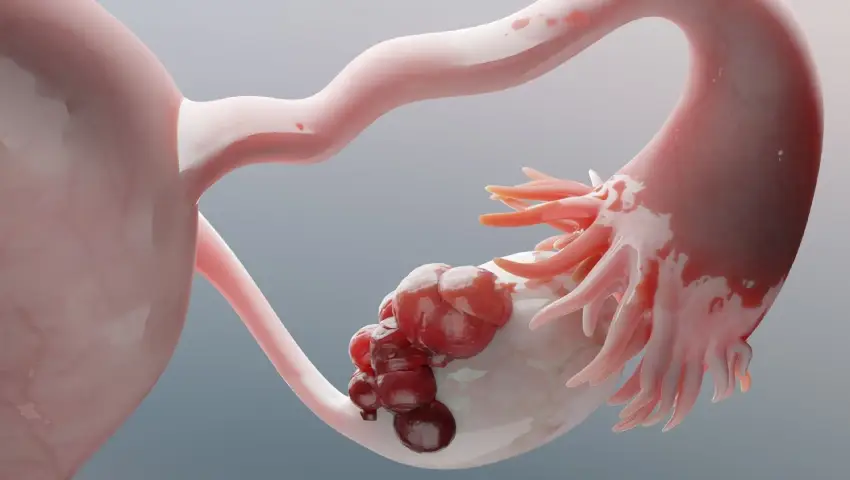
Ovarian cysts are fluid-filled sacs that develop inside or on the surface of a woman’s ovary. These cysts can occur due to hormonal changes, ovulation, pregnancy, or other underlying health conditions. Most ovarian cysts are functional, meaning they form naturally during the menstrual cycle and usually resolve without treatment. However, some cysts may grow large, become painful, or cause complications like rupture or twisting of the ovary (ovarian torsion).

Symptoms of Ovarian Cysts:

While small cysts often do not cause symptoms, some women may experience:

  • Pelvic pain (usually on one side)
  • Bloating or abdominal swelling
  • Painful periods
  • Pain during intercourse
  • Frequent urination or difficulty emptying the bladder
  • Irregular menstrual cycles

In such cases, consulting a qualified ovarian cyst doctor in Pune is recommended.

How Are Ovarian Cysts Treated?

Treatment for ovarian cysts depends on the type, size, symptoms, and overall health of the woman. Dr. Shraddha Galgali, one of the best gynecologists in Pune, follows a patient-focused approach to decide the right treatment.

Watchful Waiting:

If the cyst is small and not causing symptoms, Dr. Shraddha Galgali may recommend a “wait and watch” approach. Regular sonography is done to check if the cyst disappears on its own, which is very common.

Medications:

Hormonal medicines like birth control pills may be prescribed to regulate periods and prevent the formation of new cysts. These medicines do not shrink existing cysts but are effective in managing future risk.

Pain Management:

For women experiencing discomfort, pain-relieving medicines are suggested. Lifestyle modifications such as regular exercise and diet changes may also be advised.

Laparoscopic Surgery:

When cysts are large, painful, or suspected to be cancerous, Cysts surgery may be required. Dr. Shraddha Galgali is an expert in advanced laparoscopic surgery in Pune, which is a minimally invasive procedure. This ensures faster recovery, smaller cuts, and minimal scarring.

  • Cystectomy – Removal of the cyst while preserving the ovary.
  • Oophorectomy – Removal of the entire ovary, if necessary.
Treatment for Complex Cysts:

In rare cases, cysts may be cancerous or linked to endometriosis/PCOS. In such situations, Dr. Shraddha Galgali provides a comprehensive treatment plan, combining surgery, medical management, and long-term follow-up.

Why Choose Dr. Shraddha Galgali for Ovarian Cyst Treatment in Pune?

When searching for the best gynecologist in Pune, patients want someone who is not only highly qualified but also compassionate. Here’s why Dr. Shraddha Galgali is the most trusted choice for women’s health care in Pune:

  • High Expertise: More than 10 years of experience in gynecology and laparoscopic surgery.
  • Advanced Training: Fellowship in Laparoscopy & Hysteroscopy from Italy.
  • Specialist in High-Risk Cases: Expert in handling complex ovarian cyst cases and high-risk pregnancies.
  • Modern Clinic: Dr. Shraddha’s EXCELLA Women’s Wellness Clinic, Punawale, Pune, is equipped with state-of-the-art facilities.
  • Patient-Centric Care: Focus on personalized treatment with empathy and compassion.

Ovarian Cysts and Fertility:

Many women worry whether ovarian cysts can affect fertility. In most cases, functional cysts do not cause infertility and may resolve naturally. However, conditions like PCOS, endometriosis, or repeated cyst formation may impact fertility. Dr. Shraddha Galgali, Pune’s leading gynecologist, also offers infertility treatment and counselling. She provides guidance on lifestyle changes, medications, and advanced procedures like IVF when required. This makes her one of the most preferred gynecologists for women planning pregnancy in Pune.

Conclusion:

Ovarian cysts are common, but with timely diagnosis and treatment, most women recover without complications. For women in Pune looking for the best gynecologist for ovarian cyst treatment, Dr. Shraddha Galgali offers world-class expertise, advanced laparoscopic skills, and compassionate care. She consults and provides treatment at Dr. Shraddha’s EXCELLA Women’s Wellness Clinic, Punawale, Pune. Whether it is routine pregnancy care, infertility management, laparoscopic surgery, or ovarian cyst treatment, Dr. Shraddha Galgali is trusted by hundreds of women across Pune. If you have any questions about ovarian cysts or need expert treatment, consult Dr. Shraddha Galgali, one of the best gynecologists in Pune.